
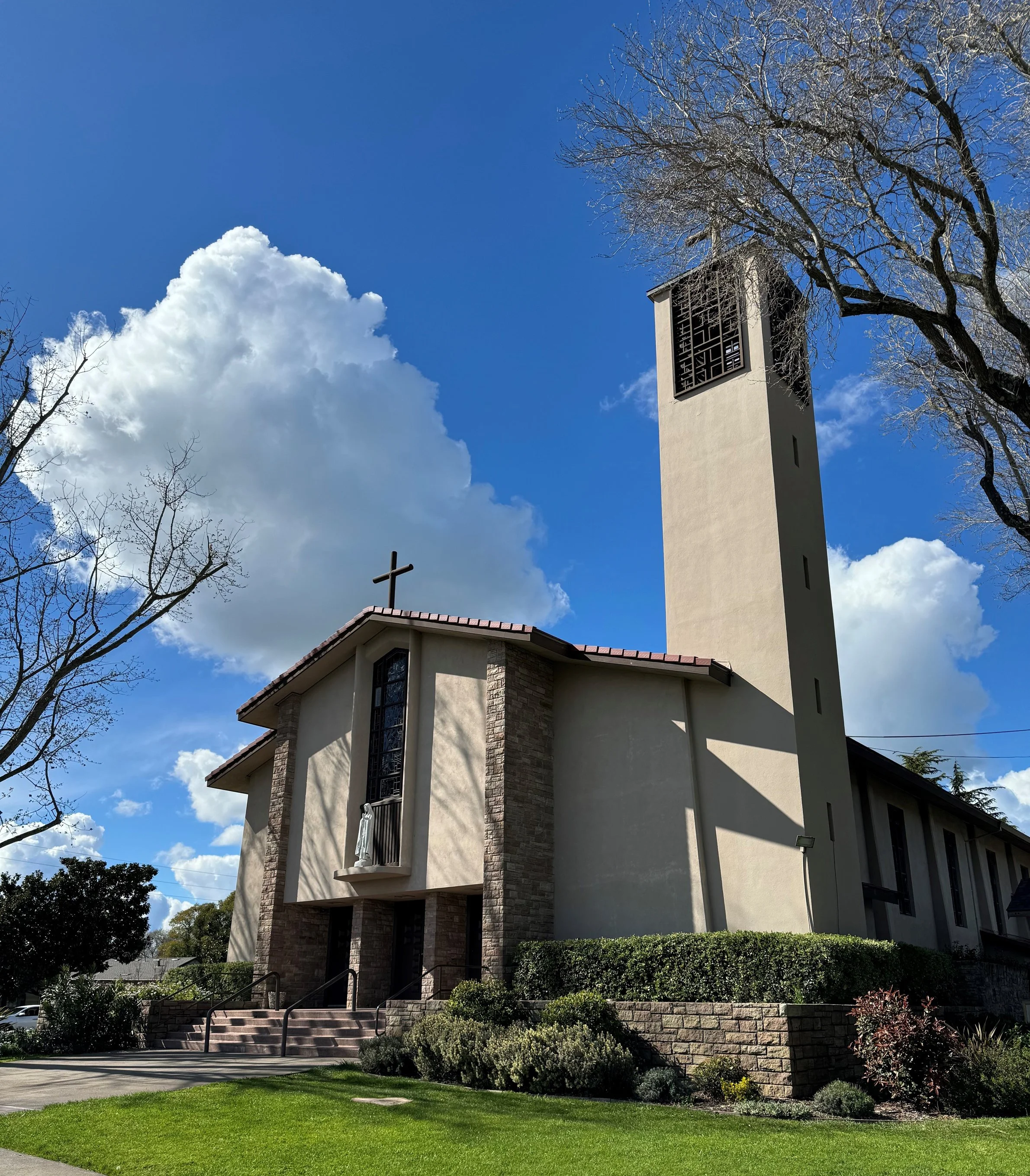
About the Cathedral of St. Eugene
The Cathedral of St. Eugene is the Cathedral Church of the Diocese of Santa Rosa. Founded in 1950 and designated the Cathedral in 1962, our parish is home to more than 1,700 families and a vibrant variety of ministries.
Welcome to our parish community, centered on Christ Jesus, our Lord.

Our Mission
Saint Eugene’s Cathedral Parish, under the leadership of the Bishop of Santa Rosa, is a community of people united through faith, worship, and service. As disciples, we are empowered through grace to proclaim and explore God’s word, to celebrate the mysteries of His redemptive action in history, to honor the traditions of the Catholic Church, to foster personal spiritual growth, and to promote fellowship within and beyond our parish. As members of civil society, we are instruments of peace, justice, reconciliation, and service to others.
Our Clergy
Reverend Moses Brown, Pastor
Reverend Bala Putchakayala, Parochial Vicar
Reverend Anil Yesupogu, Parochial Vicar
Deacon Michael Heinzelman
Deacon Gary Moore
Deacon Russ Bowden
Our Vision
As a Cathedral Parish community striving to live the Gospel, we aspire to be an example of Christian leadership for the Diocese of Santa Rosa. Through teaching and preaching, we renew our efforts to pass the Catholic faith to our children and to those seeking membership in the Church. We will continue the quality of worship that inspires us to pursue spiritual excellence in our liturgies. In partnership with and led by our dedicated clergy, we hope to be a parish community that is rich in faith, that inspires further growth in our faith, personal involvement in parish activities, that has an appreciation for the values of friendship and Christian community, that reaches out to the sick and the poor, and that nurtures vocations to the priesthood, diaconate, and religious life.
Our History
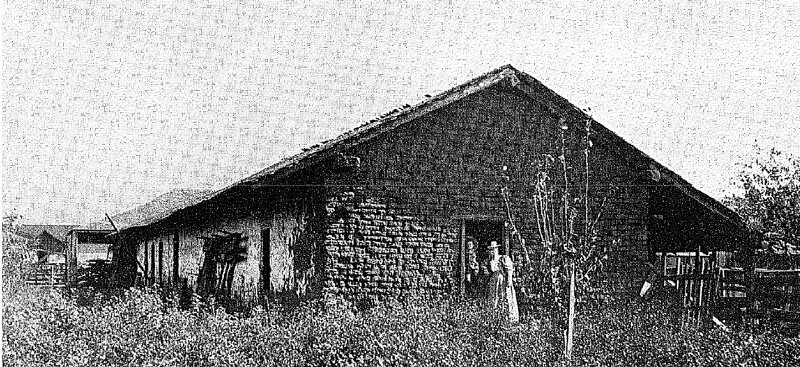
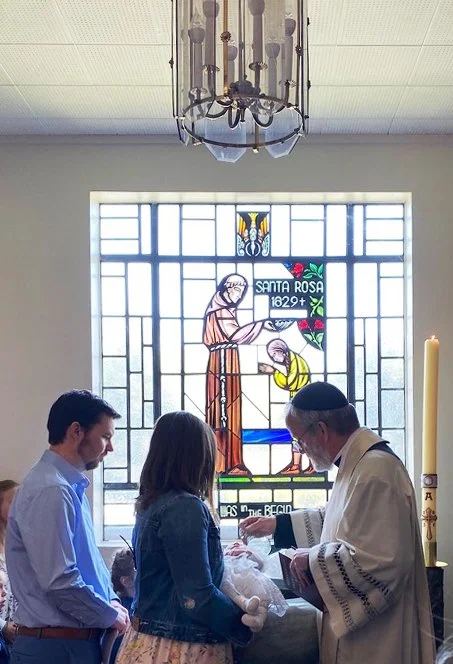
Native Americans lived in and around the present-day city of Santa Rosa, and along the creek that runs past St. Eugene’s parish, before the Europeans settled in the area. The Spanish arrived in the early 1800's and established a mission on land next to where St. Eugene’s Cathedral now stands. Around 1829 they built an adobe mission building on site, which was considered the first building in the valley. A legend handed down by generations tells the story of a visiting Spanish priest, Father Juan Amorosa, baptizing a young Native American girl in the adjacent creek. It was customary for Spanish priests to name rivers and creeks for Catholic saints. This baptism took place on the day of the Feast of Santa Rosa de Lima and Fr. Amorosa named the creek and the young girl Santa Rosa. (This baptism was not registered in official church records and, unfortunately, cannot be verified.)
Sometime in the late 1830’s Spanish authorities deeded land to Señora Maria Ignacia Lopez de Carrillo and it included this same area of land and the mission, which had since been abandoned. It was the first deeded land in the local area. Señora Carrillo was the mother-in-law of General Vallejo, who was the commander of the Mexican forces north of the Presidio of San Francisco. She converted the adobe into her home. As more people moved into California, many settled in the Santa Rosa area. Commercial enterprises began to spring up in the area. In the early 1850's a section of the adobe was used as a store. At the same time further west of the adobe, a pony express post was established and the town of Santa Rosa was laid out. The city of Santa Rosa was incorporated in 1868.
St. Eugene’s parish was established on July 1, 1950 by the Most Reverend Archbishop John J. Mitty, Archbishop of San Francisco. It was named after Eugene I, a Roman priest who served as Pope from 654 to his death in 657. The parish was organized and founded by the Rev. Erwin J. Becker. The dedication of the new church was held on November 25, 1951. At that time there were few homes or businesses within the parish area and the church was near the eastern outskirts of Santa Rosa. The parish school was opened in 1953. St. Eugene’s was designated a Cathedral on February 20, 1962 when the Diocese of Santa Rosa was split off from the Archdiocese of San Francisco.
Today the parish is located within a more central part of Santa Rosa, the city’s eastern boundaries having been expanded over the years. It is in an area that is zoned commercial and residential. There are numerous businesses within the parish boundaries, including a major shopping center. Most of the residential areas within the parish area were built more than thirty years ago and many new outlying subdivisions have sprung up in recent years.
The baptism of Saint Rose in 1829 is depicted in a stained-glass window located in the Cathedral’s baptistry vestibule. The Carrillo adobe ruins are still standing adjacent to the parish and are slated to become a city park. Santa Rosa has grown steadily since its inception to its current population of over 178,000 (2020 census). St. Eugene’s parish is currently home to more than 4,300 registered members.
Historical Sources: City of Santa Rosa, Library of Congress, church records
How St. Eugene Got its Name
The history of how the Cathedral got its name is shrouded in mystery. Some have said that the original plan was to name the new church "Our Lady of Lourdes" as evidenced by the statue of Our Lady of Lourdes that sits atop the roof covering the main entrance of the Cathedral. This plan was changed however, due to a surge in popularity of Pope Pius XII after the end of World War II. Because of the many heroic actions taken by the Pope, which saved countless Jewish lives, people of all Faiths wanted to express their gratitude to him. One way of expressing this gratitude by the people of the Archdiocese, was to honor him using his given name (Eugenio) for the new church being constructed in Santa Rosa. Of course, the name Eugene was also the name of Pope Eugene I, a Roman priest who served as Pope from 654 until his death in 657. Thus, the story goes, the new church on the corner of Farmer’s Lane and Montgomery Drive became “St. Eugene’s.”
Renovations to the Cathedral
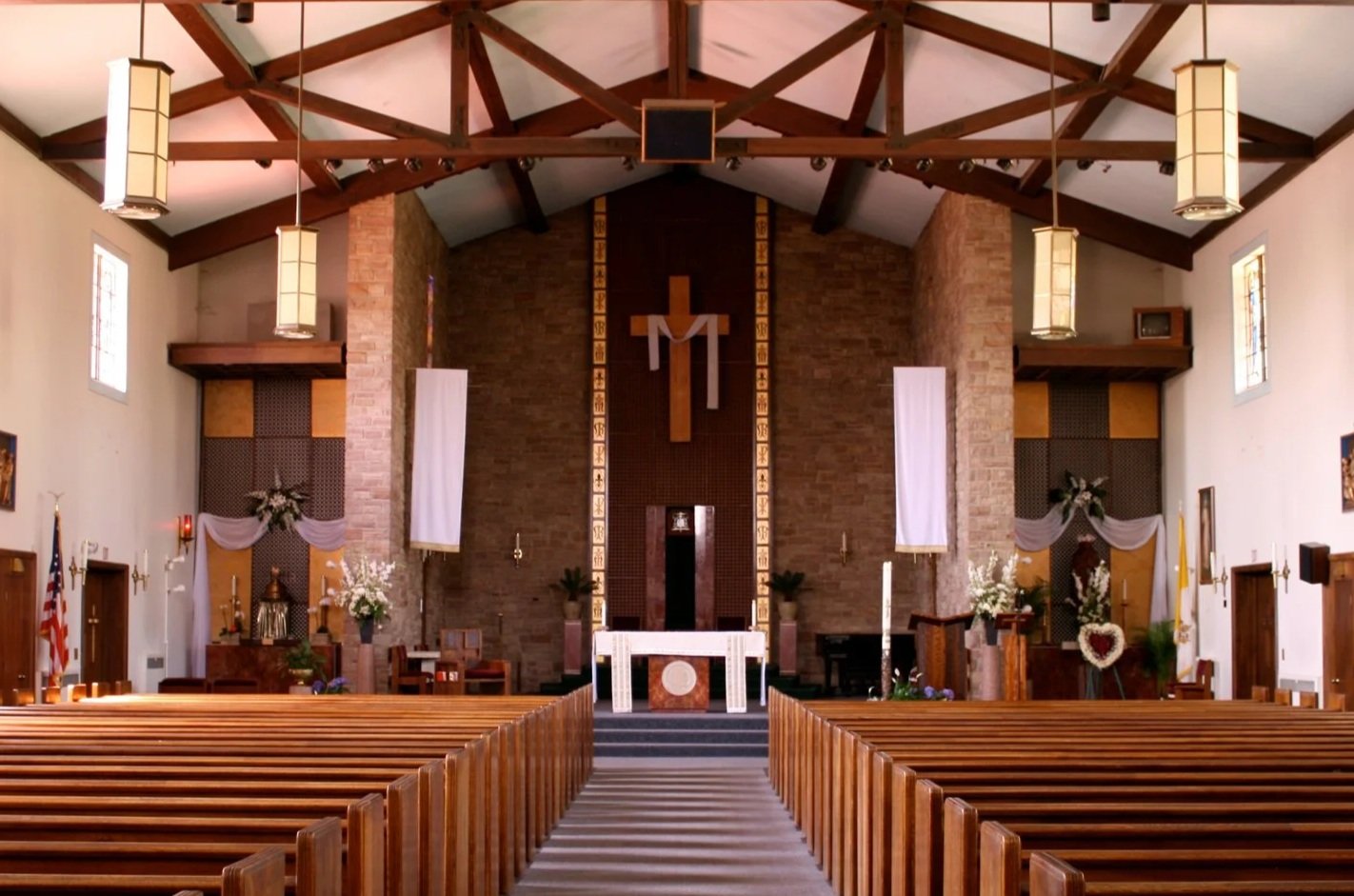
Before renovations
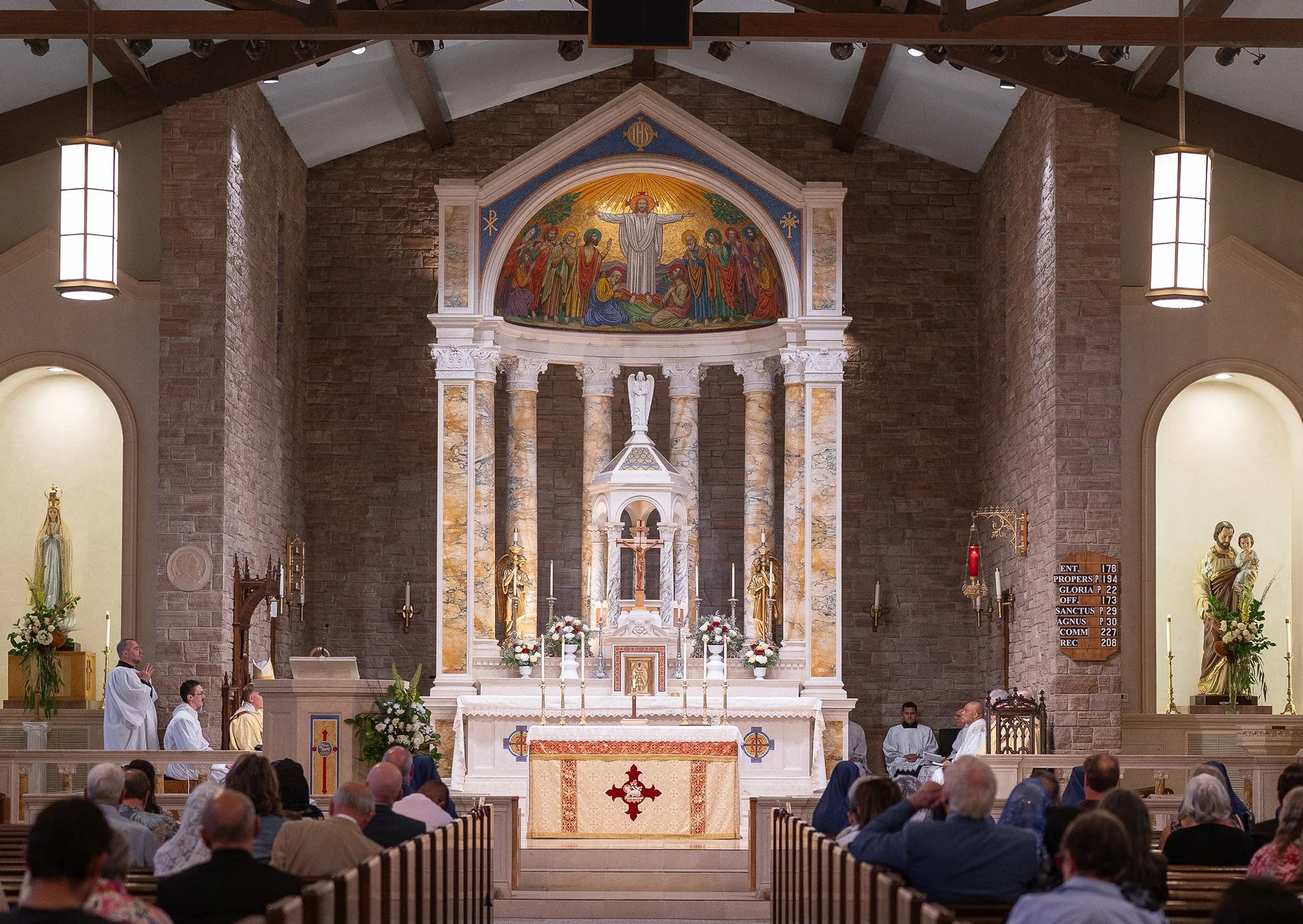
After renovations
When St. Eugene’s Church was built in 1950, it was designed as a parish church for a growing Santa Rosa community. Twelve years later, in 1962, the newly established Diocese of Santa Rosa made St. Eugene’s its cathedral. The building, however, had never been designed to serve as a cathedral.
Over the years, like many churches of its era, the sanctuary was changed to reflect the liturgical styles of the time. The Blessed Sacrament was moved to a side altar, and the main altar was arranged for Mass facing the congregation. While functional, the sanctuary lacked the beauty and sense of sacredness befitting the mother church of the diocese.
In 2011, Bishop Robert F. Vasa began looking for ways to restore the beauty of the Cathedral and renew its sense of the sacred, working with the Cathedral’s rector, Father Frank Epperson. A fundraising campaign began in 2013–14 with a goal of raising $500,000 for the renovation of the sanctuary.
Then, an extraordinary opportunity presented itself.
In Philadelphia, Ascension of Our Lord Parish, a beautiful church nearly a century old—was scheduled for demolition. Within it stood a magnificent marble high altar, baldacchino, and communion and altar rails. Rather than allowing these sacred furnishings to be lost, Father Epperson was able to rescue them and bring them to Santa Rosa.
The altar and baldacchino were crafted from two varieties of marble: Carrara and the much rarer Sienna marble. The altar itself was a remarkable structure made up of many individual pieces. It was carefully disassembled, packed, and transported across the country to its new home at St. Eugene’s.
For a time, the pieces of this century-old altar sat on the lawn of the Cathedral, awaiting their new life in Santa Rosa.
The renovation was about more than beautiful architecture. It was an effort to recover a sense of awe and reverence in the worship of God. Through the restoration of the sanctuary, along with the renewed use of Latin, chant, incense, and other venerable traditions of the Church, the Cathedral sought to make tangible the sacred reality celebrated within its walls.
The result is a sanctuary that connects the present Cathedral with the generations of Catholics who worshipped before us. Marble rescued from a church in Philadelphia now serves the faithful of Santa Rosa, giving new life to a beautiful piece of sacred heritage.
What began as a modest parish church in 1950 has become the Cathedral of the Diocese of Santa Rosa. Its sanctuary now reflects that identity, not simply through its beauty, but through its purpose: to lift our minds and hearts toward God.